Master Keyword Research in 2025: Proven SEO Strategies

Are you having trouble getting your website seen even though you’re making good content? The problem is often because you haven’t mastered keyword research—the key part of SEO in 2025. With Google and how people search changing, understanding the right keywords can increase your website traffic and help you stand out from others.
This guide covers the latest methods, tools, and strategies for keyword research to help improve your SEO, whether you’re a marketer, blogger, or business owner.
Why Keyword Research Still Matters in 2025?
The competition in SEO has gotten tougher, but keyword research is still the base of any strong strategy.
It helps you:
Learn what your audience is searching for
- Make content that speaks right to their needs and leads to action
- Beat out competitors for important search tenure
- Build authority by linking related topics and ideas together
- Core Steps for Effective Keyword Research
1.Set Your Goals and Know Your Audience
- Figure out what your business wants to achieve (like more visitors, more sales, or better label recognition)
- Create detailed guest profiles: What are your ideal customers looking for online?
- Think about their problems and the problem they ask
2. Think About Important Topics and Keywords
Ask yourself: “What would someone looking for my product or service type into Google?
” Write down main topics connected to your zone of work. Use data to find out which words are already bringing in traffic.
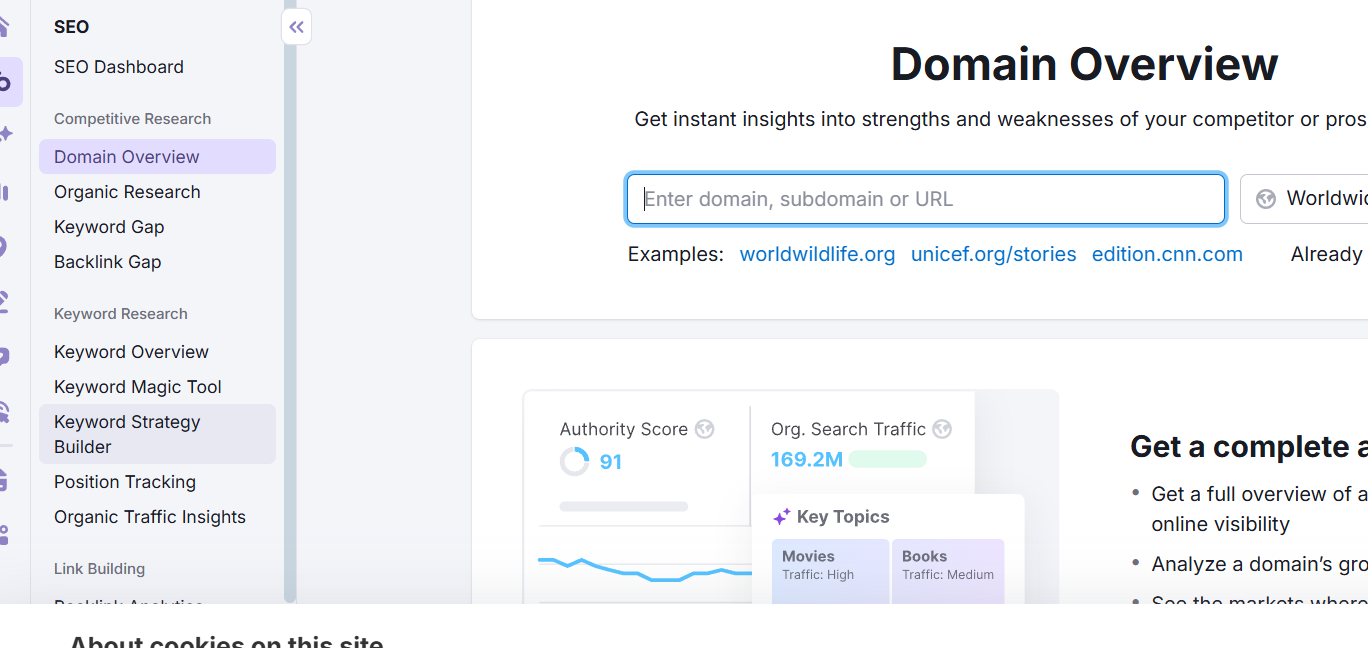
3. Leverage Advanced Keyword Tools (2025’s Best)
| Tool | Key Features & Use Cases |
|---|---|
| SEMrush | Magic Tool for keyword ideas, difficulty, gap analysis |
| Ahrefs | Keyword Explorer, competitive gaps, SERP overview |
| Google Keyword Planner | Accurate, real-world data |
| Ubersuggest | Free, beginner-friendly, long-tail discovery |
| Answer the Public | Visualizes related questions & topics |
| SE Ranking | SERP analysis & affordability |
| Keywords Everywhere | Volume, competition, and CPC data |
| KWFinder (Mangools) | User-friendly, affordable long-tail finder |
4. Analyze the Data: Volume, Difficulty & Intent
- Search Volume: it helps to find out how much traffic a keyword might bring.
- Keyword Difficulty (KD): It indicates the difficulty level for the particular keyword
- Use tools to find easy ranking keywords, and have low competition, or are long-tail.
5. Competitor and SERP Analysis
- Look at the topics and keywords your rivals are ranking for, but you aren’t.
- Examine the search results: Websites that are coming on top are they blog posts, guides, product pages, or videos?
- Look at the “People Also Ask” and “Related Searches” sections on Google for ideas.
6.Build a List
- Arrange keywords based on how good they are, their impact , and how well they match the search intent.
- Don’t only target high-volume or common keywords—look for a mix that helps build authority.
Step-by-Step Example: Keyword Research (2025)
List Seed Topics: For example, “keyword research,” “SEO tools,” “SERP analysis.
- Use SEMrush Keyword Magic Tool
- Find allied long-tail and question-based keywords.
- Export the list for farther analysis.
- Analyze Metrics: check monthly search volume and trends on keywords.
- Competitive Gap: Use the Keyword Gap from ubbersuggest or semrush tool to find opportunities your rivals are missing.
- Select & Group: Create groups of keywords that match your target audience
Actionable Tips to Maximize Your Efforts.
- Use both free and paid tools to get correct data.
- Focus on long-tail and question-based keywords to take advantage of voice search and AI-related queries.
- Keep an eye on trends using Google Trends for seasonal or new topics.
- Don’t stuff keywords and write for your readers first.
FAQs – People Also Ask
Q1: What is keyword research in SEO?
Answer (snippet-ready): Keyword research in SEO is the process of identifying the search terms your target audience uses to find information, products, or services online. It guides your content creation, helping you attract relevant traffic and rank higher on search engines.
Q2: What’s changed in keyword research for 2025?
Answer: In 2025, focus has shifted to search intent, topical authority, and leveraging AI-powered keyword tools. Long-tail, conversational, and question-based phrases have become more important due to evolving user behavior and voice search.
Q3: What are the best free keyword research tools in 2025?
Answer: Top free tools include Google Keyword Planner, Answer the Public, Ubersuggest (limited free use), KeywordTool.io, and Keywords Everywhere browser extension.
Q4: How do I find low competition keywords?
Answer: Use tools like SEMrush, Ahrefs, or KWFinder to filter by keyword difficulty and volume. Analyze SERPs for weak competition, and explore long-tail or question phrases that bigger sites overlook.
Q5: How many keywords should I target per page?
Answer: Each page should target one main keyword and 3–5 closely related secondary keywords (variations and LSI). Build topic relevance, don’t force unrelated phrases